
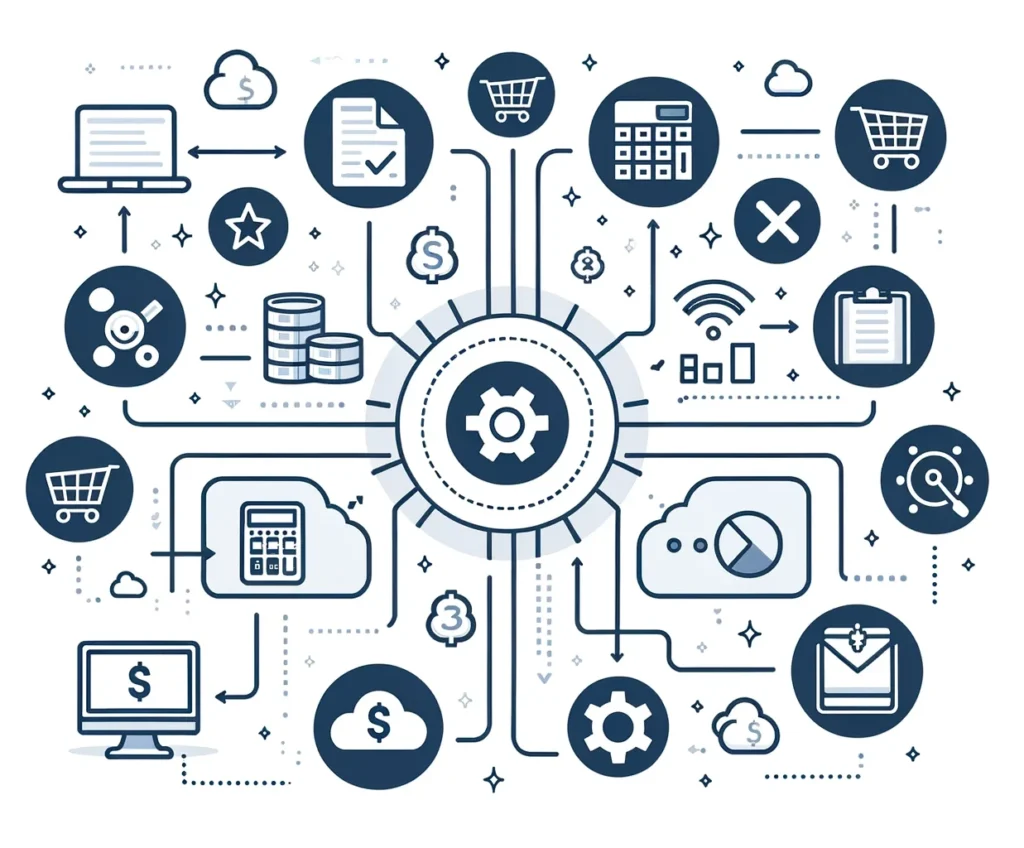
Today, nearly every business taking ERP implementation under consideration will have systems already in place that could be changed with newer ERP modules currently under development.
Consequently, a crucial factor in the adoption of an ERP system is identifying which current systems will be replaced, which ones need to be integrated, and which are performing well independently and should remain unchanged.
Keep in mind, the more data integrated into the ERP, the greater the value of the investment, so it makes more sense to integrate all systems rather than leaving them out of the ERP.
If it doesn't, it's worth considering employing an ERP module that can get the job done.
Data migration is anything but simple. Connectors can perform decently in the integration of ERP systems from separate vendors – still, commitment to timely and quality updates can vary. It's crucial to keep in mind that any upgrades can break or disrupt connectors, potentially requiring rework or completely derailing upgrade plans.
While some connectors function in real-time, other types synchronize systems periodically. Some exchange only a limited set of data between systems, while some work unidirectional. If you've employed extensive configuration customizations, certain data types might not be recognized by the connector.